

Earth Pioneers: Learning Through Earth to Build a Better World
Middle School
All classes will run through Google Classroom
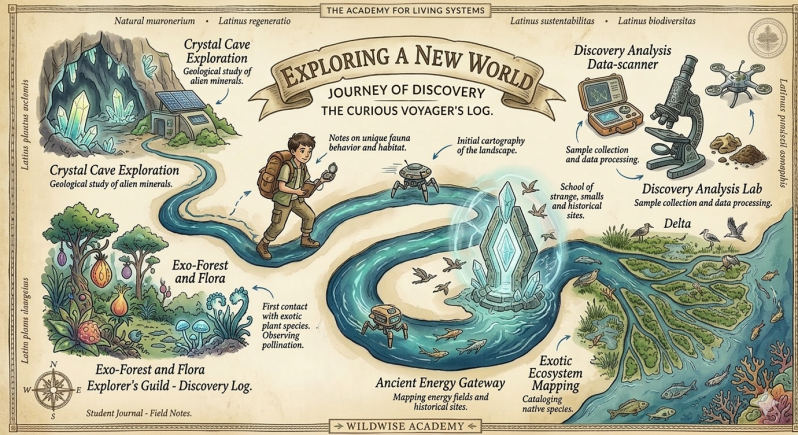
Earth has been shaping itself for billions of years - through shifting continents, volcanic activity, climate change, and the slow movement of land and water. At the same time, humans have migrated, adapted, and built civilizations in response to these ever-changing landscapes.
In this interdisciplinary course, students explore Earth as both a physical system and a human story. Through geography, earth science, and history, we investigate how the planet formed, how it continues to change, and how human movement and culture are deeply connected to the land.
Meeting once weekly in a live online classroom, students examine Earth’s geological history, continental drift, and patterns of human migration. Along the way, we explore landforms, natural resources, ecosystems, and the ways humans have used, and sometimes misused, the environments they inhabit.
Students will take on the role of planetary explorers, using their understanding of Earth to imagine and design a new planet for human life.
Learning is collaborative and inquiry-based. Students work in small teams to research Earth systems, analyze maps, and apply their knowledge to create a model of a new world that reflects thoughtful, sustainable choices.
Hands-on projects help bring the learning to life.
Students will:
-
design a new planet and map its geography
-
make decisions about land use, resources, and sustainability
-
explore human migration and settlement patterns
-
investigate plate tectonics and landform creation
-
analyze how geography shapes culture and civilization
By the end of the course, students will understand that Earth is more than a place we live - it's a dynamic system that holds lessons for how we might live more responsibly in the future.
What Students Will Do
Students will:
-
explore Earth's geological history and changing landscapes
-
analyze maps and learn geographic and spatial thinking skills
-
investigate human migration and settlement patterns
-
design and develop a sustainable planetary model
-
collaborate on a final planetary exploration project
Course Format
-
Live online class once per week
-
Geography and map-based investigations
-
Short weekly readings or videos
-
Collaborative planetary design project
-
Hands-on earth science activities
-
Discussions on sustainability, culture, and human impact
Assessment & Grading Policy
To foster a growth-oriented environment, this course utilizes a Feedback-First model.
-
Primary Evaluation: All assignments and assessments will receive comprehensive, qualitative feedback. This feedback is designed to highlight strengths and identify specific areas for improvement.
-
Grades by Request: If you would like a grade, you may request it at any time.
Cost
$295 per semester
Includes:
-
one live class per week
-
collaborative research project
-
mapping and science investigations
-
instructor feedback and guidance