

Destination Unknown:
Operation Blind Terrain
Late Elementary & Middle School
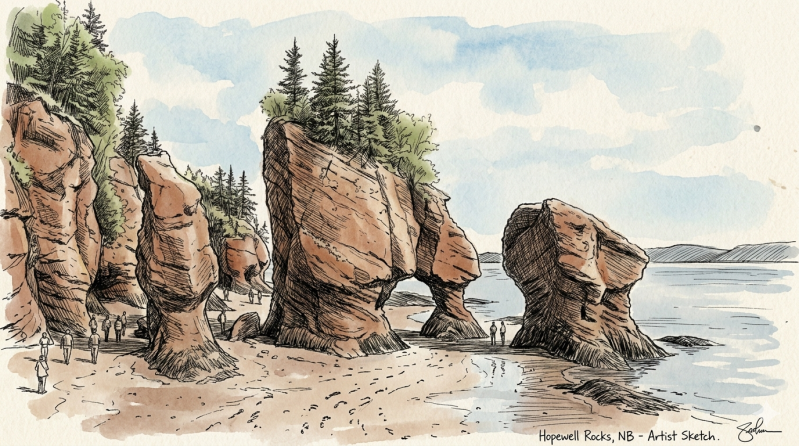
Your student is about to be dropped - blindfolded - into one of the most extreme and scientifically significant landscapes on Earth. No labels. No maps. No answers handed to them. Just evidence, a set of field clues, and the science to decode them.
Destination Unknown is a complete, self-directed earth science unit study built for middle and high school students who learn best by doing. Each of the six missions follows the same structure: students complete a hands-on experiment that models the geologic process that created the landscape, work through a set of field clues drawn from direct observation of their surroundings, and then read a detailed Field Intelligence Report that gives them the full science behind what they have encountered. The mystery is solved only when a student can name their location and explain exactly how they know.
This is not a workbook. There are no fill-in-the-blank questions or multiple choice answers. Students are asked to think like scientists - to observe carefully, reason from evidence, and build toward a conclusion. The writing is engaging and accessible without being simplified, and the science is real.
What is covered across the five missions:
Each mission pairs a specific landscape with the geologic force that created it, a hands-on experimental model, primary field observation skills, and a comparative analysis of similar landscapes around the world. Together the five missions build a working understanding of how Earth's major surface-shaping forces operate and how to read the evidence each one leaves behind.
What is included:
- A full student-facing mission briefing and unit introduction
- Five complete hands-on experiments with materials lists, step-by-step procedures, and observation prompts
- Five graduated field clues per mission, written as direct sensory observation
- Five detailed Field Intelligence Reports covering the geology, geography, ecology, and human history of each landscape
- Recommended documentaries, virtual field trips, Google Earth exploration guides, and museum resources for each mission
- A cumulative capstone project where students choose a real-world location that fascinates them and apply everything they've learned to uncover how it formed, how it is changing, and what should happen to it next. Weaving together Earth Science, Geography, Research, and Writing, it comes complete with a parent guide, phase checklists, and a clear rubric.
This unit study is designed for:
- Homeschool families looking for a rigorous, engaging earth science curriculum that does not require a classroom or expensive lab equipment
- Students in grades 7 through 10, though advanced sixth graders and interested high schoolers will find it equally challenging
- Learners who are curious about the natural world, enjoy hands-on work, and are ready to be challenged to think rather than memorize
- Parents who want a complete, ready-to-use unit that requires minimal preparation and no prior science background to facilitate
A note on the approach:
Every mission in this unit is built around a single conviction: that the best way to understand how the Earth works is to stand inside it and read what you see. The field clue format is designed to put students inside the landscape before they know where they are, so that when the answer comes, it lands as a discovery rather than a fact. The experiments are not demonstrations - they are simulations. The field reports are not summaries - they are the science, written for a student who is ready to engage with it seriously.
Earth science is often taught as a list of definitions. This unit treats it as a mystery worth solving.
Formats available: Digital PDF download - print at home, use on screen, or send to a print shop for binding.
Standards Covered: This unit aligns with Next Generation Science Standards (NGSS)
Cost: $75